
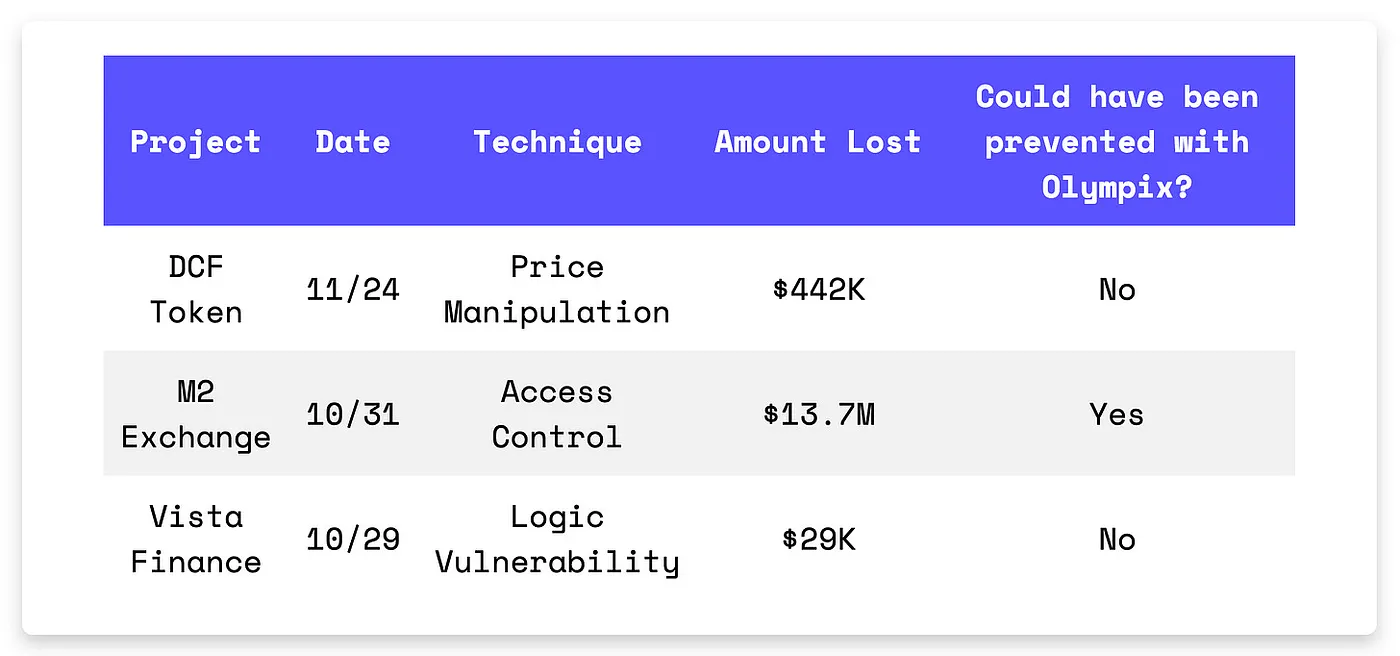
M2 Exchange lost $13.7M after an attacker bypassed hot wallet access controls in a closed-source CEX environment. DCF token saw $442K drained through a classic burn-based price manipulation exploit. Vista Finance suffered a $29K loss when its staking logic failed to restrict token usage, allowing a flash loan attacker to burn and mint tokens for profit.
On November 24th, the DCF token exploit on the BNB chain resulted in a $442K loss due to a price manipulation attack. The root cause of the exploit was that the attacker was able to burn the DCF tokens by using the private _transfer() function reducing the total supply and artificially increasing the token price. The attacker then sold the DCF tokens at the manipulated higher price for profit.
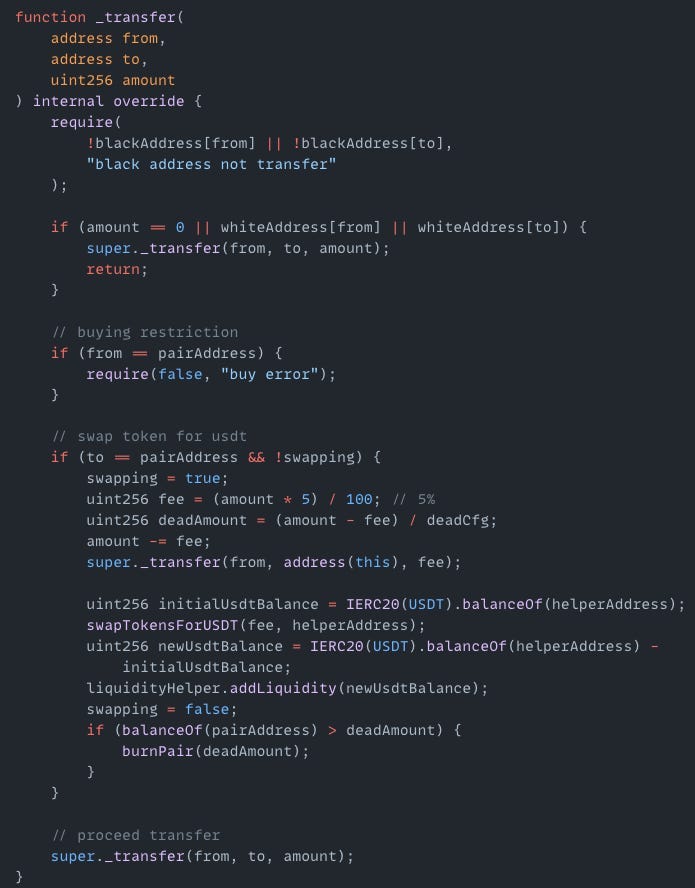
Exploited Contract (on BNB): 0xa7e92345ddf541aa5cf60fee2a0e721c50ca1adb
Transaction Hash: 0xb375932951c271606360b6bf4287d080c5601f4f59452b0484ea6c856defd6fd
On October 31st, the M2 Exchange, a centralized exchange (CEX) with a closed-source system, suffered an exploit across multiple chains, resulting in a $13.7M loss. The root cause of the exploit was an access control vulnerability in M2 Exchange’s hot wallet system. The attacker bypassed authorization checks, gaining unauthorized access to customer funds. They quickly drained assets, swapping SHIBA and USDT for ETH. The M2 Exchange acknowledged the incident and recovered part of the stolen funds.
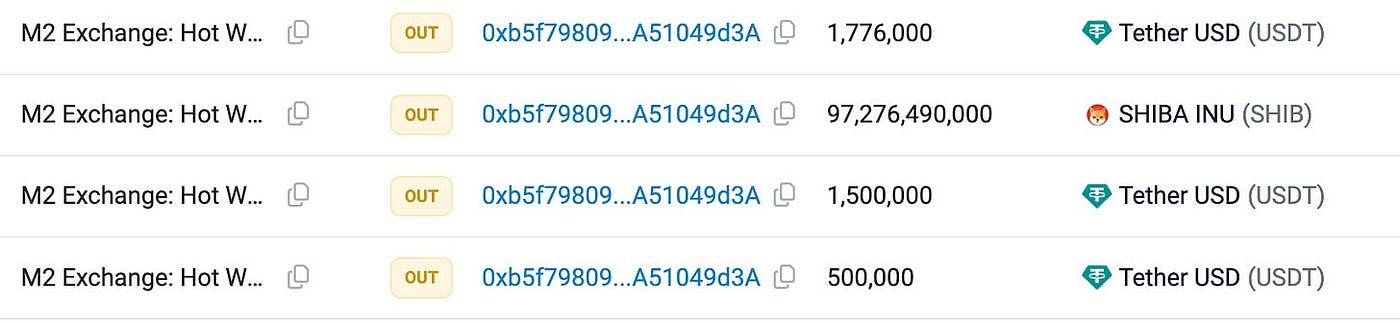
Compromised M2 Hot Wallet: 0xe26abc37b06b819243b4b104270cc18f7c835fce
One of the Exploited Contracts (SHIB Contract): 0x95aD61b0a150d79219dCF64E1E6Cc01f0B64C4cE
Transaction Hash: 0x92bd9992beeba1abac757bfdbc79e18a92b6df8acb2afa91ee2dc73120d0bf25
On October 21st, the Vista Finance exploit on the BNB chain resulted in a $29,000 loss due to a flaw in its token contract. The root cause of the exploit was an error in the staking logic. The staking system did not transfer tokens to a separate contract but instead tracked balances locally. The _burn function, used in flash loans, bypassed staking restrictions by subtracting directly from the total balance instead of checking unstaked tokens. The attacker used a flash loan to mint and burn tokens while profiting from token sales. The exploit leveraged this logic gap to enable unauthorized token usage.
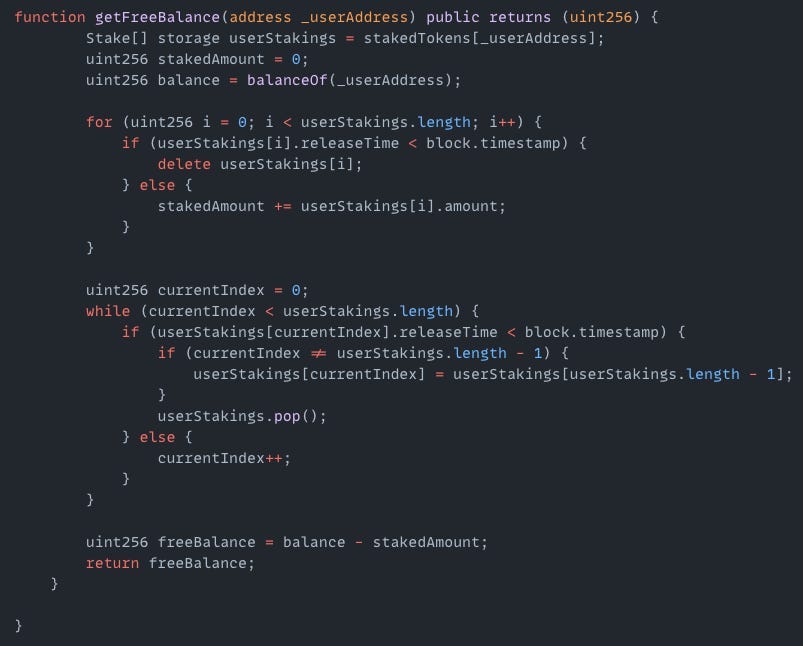
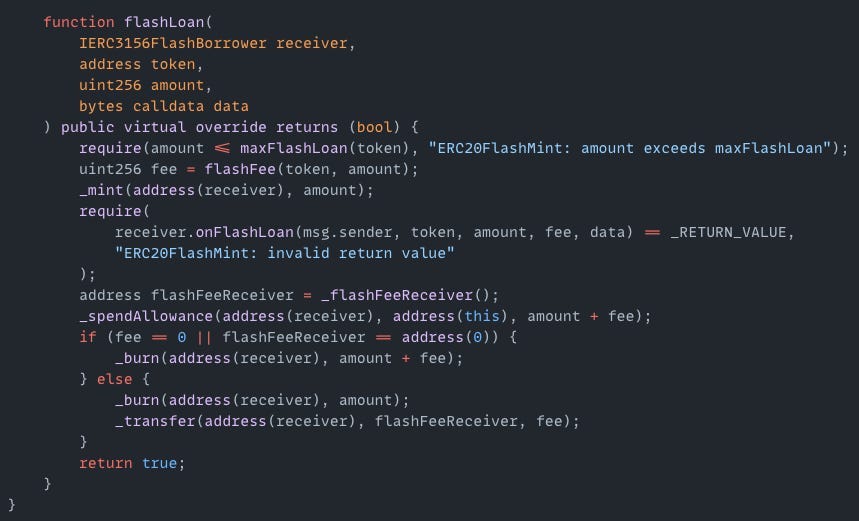
Exploited Contract (on BNB): 0x493361D6164093936c86Dcb35Ad03b4C0D032076
Transaction Hash: 0x84c385aab658d86b64e132e8db0c092756d5a9331a1131bf05f8214d08efba56